
Mountaineers' Cemetery
A respectful guide to the graves of climbers who died on the Matterhorn and the high peaks around Zermatt — the human cost behind the postcard, beside the village church.
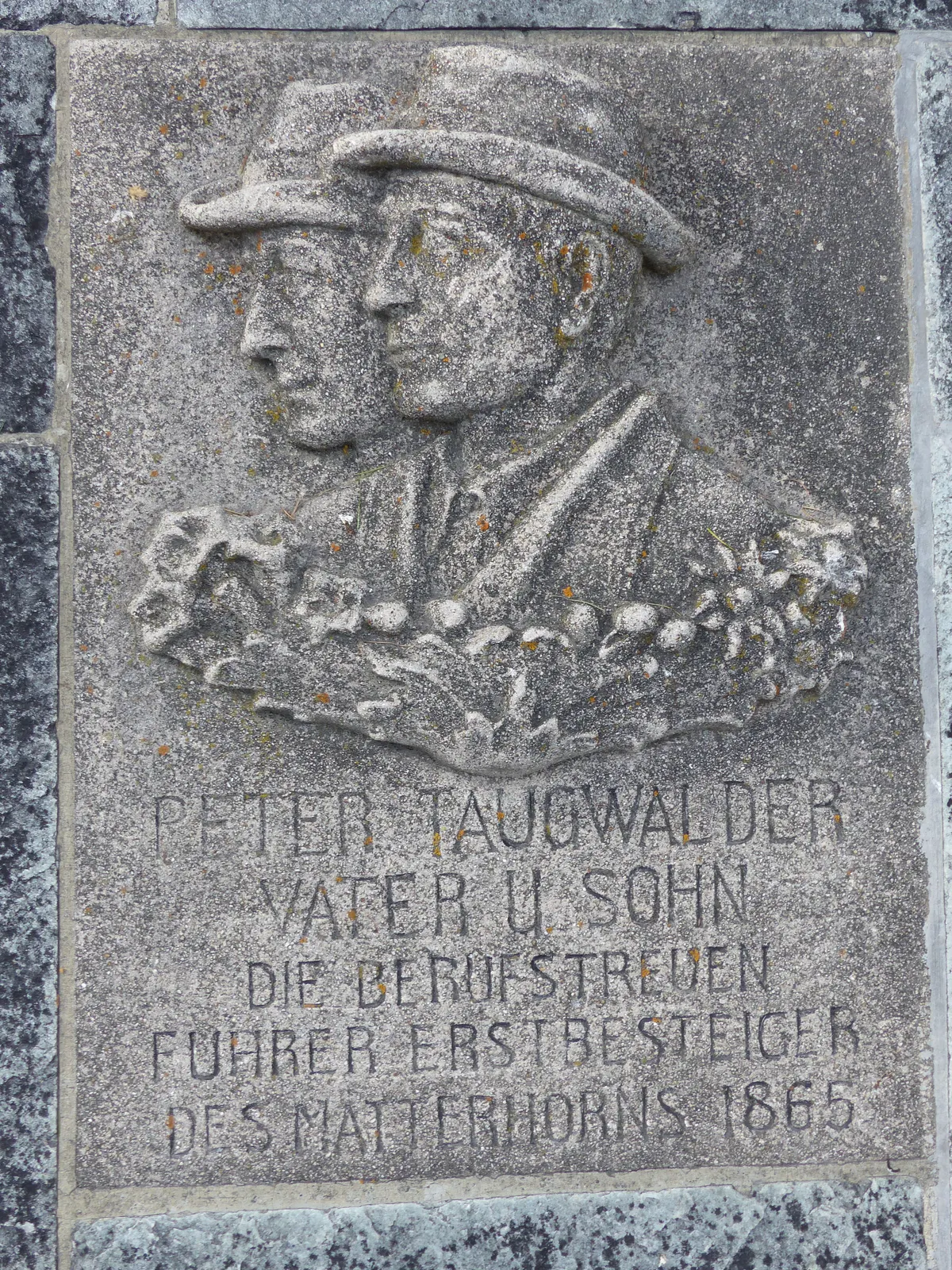
Photo: Whgler / Wikimedia Commons · CC BY-SA 4.0
- ✓Beside the parish church of St. Mauritius lie the graves of climbers who died on the Matterhorn and the surrounding four-thousanders — including victims of the 1865 first ascent.
- ✓The headstones carry ice-axes, ropes and short, often very young, lifespans; many bear the words 'I chose to climb' or simply a date on the mountain.
- ✓It is a working churchyard and a place of mourning, not an attraction — visit quietly and read it as a memorial.
- ✓Free, central and open-air, it pairs naturally with the Matterhorn Museum and the village churches a few steps away.
The price of the postcard
Zermatt's Matterhorn is one of the most photographed mountains on earth, and it is easy to forget that the same perfect pyramid has killed hundreds of people. The mountaineers' cemetery, in and around the churchyard of the parish church of St. Mauritius in the centre of the village, is where that truth is kept. Among the ordinary graves of villagers lie the stones of climbers — Swiss, British, German, American and more — who came for the high peaks above Zermatt and did not come down.
It is a small, still place, hemmed by old houses and overlooked, on a clear day, by the very mountain named on so many of the headstones. Standing here recalibrates the whole trip. The lifts and terraces and reflection lakes are one story; this is the other one, older and graver, and it deserves a few minutes of any visitor's time and respect.
1865, and the century that followed
The cemetery's most resonant connection is to the first ascent of the Matterhorn on 14 July 1865, when four of the seven climbers in Edward Whymper's party fell to their deaths on the descent after the rope between them snapped. Some of those who died that day are commemorated here, and the disaster set the tone for everything the churchyard records: triumph and loss bound together on the same mountain.
But the graves are not only from that famous summer. They span more than a century and a half of alpinism — guides and clients, the experienced and the unlucky, the very young. Read slowly and you find epitaphs that have become famous in their own right, lines about loving the mountains and choosing to climb, alongside dates that show how short some of these lives were. It is the human archive that the dramatic exhibits of the nearby museum cannot quite supply: not the rope and the gear, but the names.
- Graves and memorials span from the 1865 tragedy to climbers lost in recent decades.
- Many headstones carry climbing motifs — ice-axes, ropes, coiled lines, a single peak.
- Epitaphs often note the mountain and the date of the accident, and the youth of the climber.
- Local guides as well as foreign climbers are remembered here; the risk was shared.
Visiting with respect
This is the heart of the matter: the cemetery is a place of active mourning, and people who lost family members on these mountains still visit. It is not a sight to be ticked off. Come quietly, keep your voice low, and move through unhurriedly. It is fine to read the stones and to reflect, but think carefully before photographing — avoid framing grieving visitors, fresh graves or recent memorials, and never move flowers, stones or mementoes left by families.
There is no ticket and no opening procedure; it is simply a churchyard you can walk into beside St. Mauritius. Dress and behave as you would at any cemetery at home. A few minutes of genuine attention will mean far more, both to you and to the place, than a quick photo. If you take one thought away, let it be a sense of proportion about the beautiful, indifferent mountain at the end of the valley.
- Keep quiet and move slowly; people come here to grieve.
- Photograph thoughtfully — never people in mourning, fresh graves or recent memorials.
- Leave flowers, stones and keepsakes exactly as you find them.
- No ticket or hours; it is an open churchyard beside the parish church.
Two places of remembrance, not one
It helps to know that Zermatt's memorials to fallen climbers are not gathered in a single tidy plot. There is the churchyard around St. Mauritius in the village centre, where headstones and family graves mingle, and there is a separate, dedicated mountaineers' burial ground — the Bergsteigerfriedhof — associated with the English Church, created so that climbers, many of them foreign and far from home, could lie near the peaks that drew them. Between them they hold the village's long account of risk and loss.
Wandering both, you start to read the geography of mountaineering itself in the stones. Names recur from the same expeditions; dates cluster around bad summers and notorious routes; nationalities map the eras when the British, then the Germans, then climbers from across the world came to test themselves on the Valais four-thousanders. Some graves are tended and fresh; others have weathered for a century and a half until the carving is almost gone. The accumulation is the point — this is not one tragedy but a continuous, ongoing one, the toll of a sport practised in earnest on serious ground.
- St. Mauritius churchyard — village graves alongside those of climbers, in the centre.
- The dedicated mountaineers' burial ground linked to the English Church — for alpinists, often from abroad.
- Together they span 1865 to the present and read like a map of alpinism's eras and routes.
What the stones say
Take time with the epitaphs and you find that the families and friends of these climbers reached, again and again, for the same handful of ideas: that the dead loved the mountains, that they died doing what they had chosen, that the heights both gave their lives meaning and took them. Some inscriptions are stark — a name, an age that stops you cold, a single peak and a date. Others are almost defiant, insisting that a short life lived high was a life well spent. A few, in several languages, have been quoted so often that they have become part of the literature of mountaineering.
There is something clarifying about reading them in sequence. The marketing language of the resort — the perfect pyramid, the bucket-list summit — meets its honest counterweight here. The Matterhorn and its neighbours are not decorative. They are real, high, cold and unforgiving, and the people under these stones knew that better than anyone, and went anyway. Whether you climb or never will, the cemetery hands you a truer measure of the place than any viewpoint can.
When to go, and what to bring
There is no right or wrong time to visit, but the cemetery is at its most affecting when it is quiet — early in the morning, or toward dusk, when the day-trippers have gone and the light softens on the stone. In winter, snow on the graves and the bare trees lends the place a particular stillness; in summer, flowers left by families bring sudden colour. Whatever the season, the only things you need to bring are warm enough clothes and an attitude of quiet attention.
Because it costs nothing and asks no logistics, the cemetery rewards an unplanned visit: a few minutes folded into a walk through the village rather than a special trip. Many people find they linger longer than they expected. If the weather has closed the high mountains and a lift day is off, this is one of the most worthwhile half-hours Zermatt can offer — sobering, beautiful and entirely free.
How it fits the village
The cemetery sits in the same small triangle of the village as the parish church and the underground Matterhorn Museum, so the three together make a natural, sober counterpoint to a day of lifts and views. Many visitors do them in sequence: the museum for the documented story of the 1865 ascent and the broken rope, the cemetery for the names and the silence, and the churches for the faith that framed both the farming village and the mountaineering one.
Done in that spirit it becomes one of the most affecting half-hours in Zermatt — the part of the trip people remember when the lift queues have faded. It costs nothing, asks only courtesy, and gives the Horu its full weight.
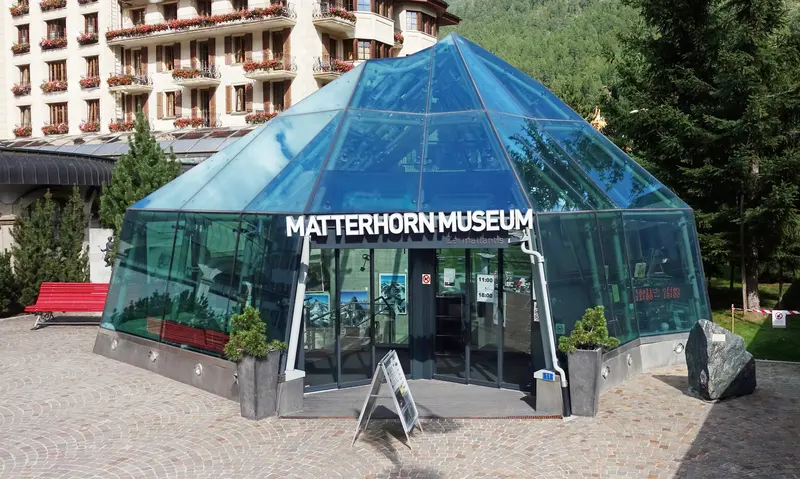 Matterhorn MuseumThe documented story of the 1865 first ascent — the broken rope, the gear and the village it made.
 Matterhorn guideThe mountain itself: its ridges, its first ascent, and why it remains as dangerous as it is beautiful.
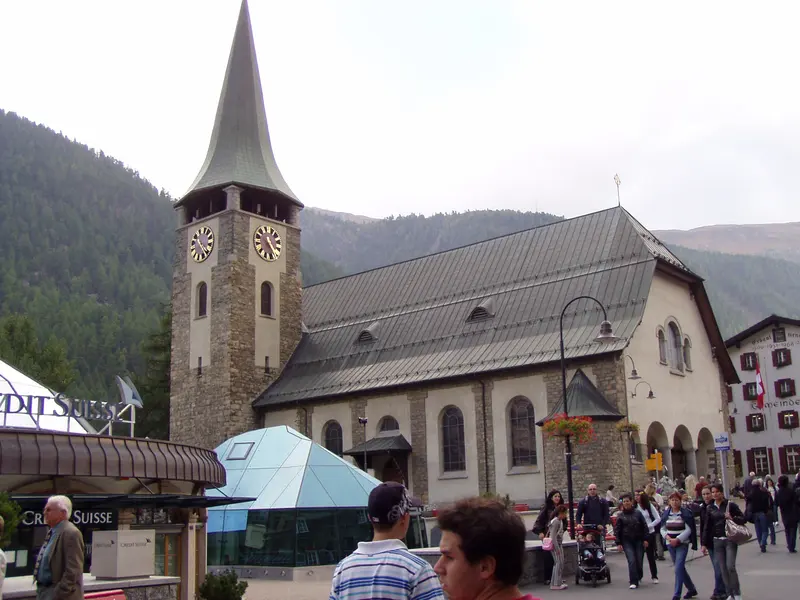 Churches in ZermattThe parish church beside the cemetery, the English Church and the village's quiet chapels.
Why it belongs on a thoughtful itinerary
It would be easy to leave the cemetery off a Zermatt trip — it is small, unmarketed and asks something of the visitor rather than entertaining them. But the people who make room for it almost always count it among the parts of the trip they remember most. In a place engineered to deliver awe on demand, here is the one stop that delivers humility instead. It reframes the mountain you have been photographing as something that has cost real lives, and it does so without melodrama, simply by letting the stones speak.
For couples and solo travellers alike, a quiet quarter-hour here pairs naturally with the village's other reflective corners — the underground museum with its broken rope, the parish church on the Kirchplatz, the dark timber lanes of the old quarter. Strung together, these make a slow, sober, deeply atmospheric counter-day to the lift-and-terrace highlights: cheap, weatherproof and entirely on the village floor. Approached in the right spirit, the mountaineers' cemetery is not a downbeat detour but the place that gives the whole experience of Zermatt its proper depth.
- The one stop that trades awe for humility — and the one people often remember most.
- Pairs with the museum, the parish church and the old quarter for a reflective, weatherproof day.
- Free, central and entirely on the village floor; it costs only a little courtesy and time.
Matterhorn Museum (Zermatlantis)
Zermatt's museum is buried beneath the Kirchplatz: a reconstructed old village under glass, the drama of the 1865 first ascent, and one of the best rainy-day depths in the village.
Read guideMatterhorn Guide
A visitor's guide to seeing, photographing and understanding the Matterhorn — the Horu — without ever roping up: viewpoints, light, history and the small practicalities of the most famous mountain in the Alps.
Read guideChurches in Zermatt
The parish church on the Kirchplatz, the little English Church built by Victorian climbers, and the quiet chapels of the valley — the faith woven through Zermatt's farming and mountaineering past.
Read guide