
Matterhorn Museum (Zermatlantis)
Zermatt's museum is buried beneath the Kirchplatz: a reconstructed old village under glass, the drama of the 1865 first ascent, and one of the best rainy-day depths in the village.
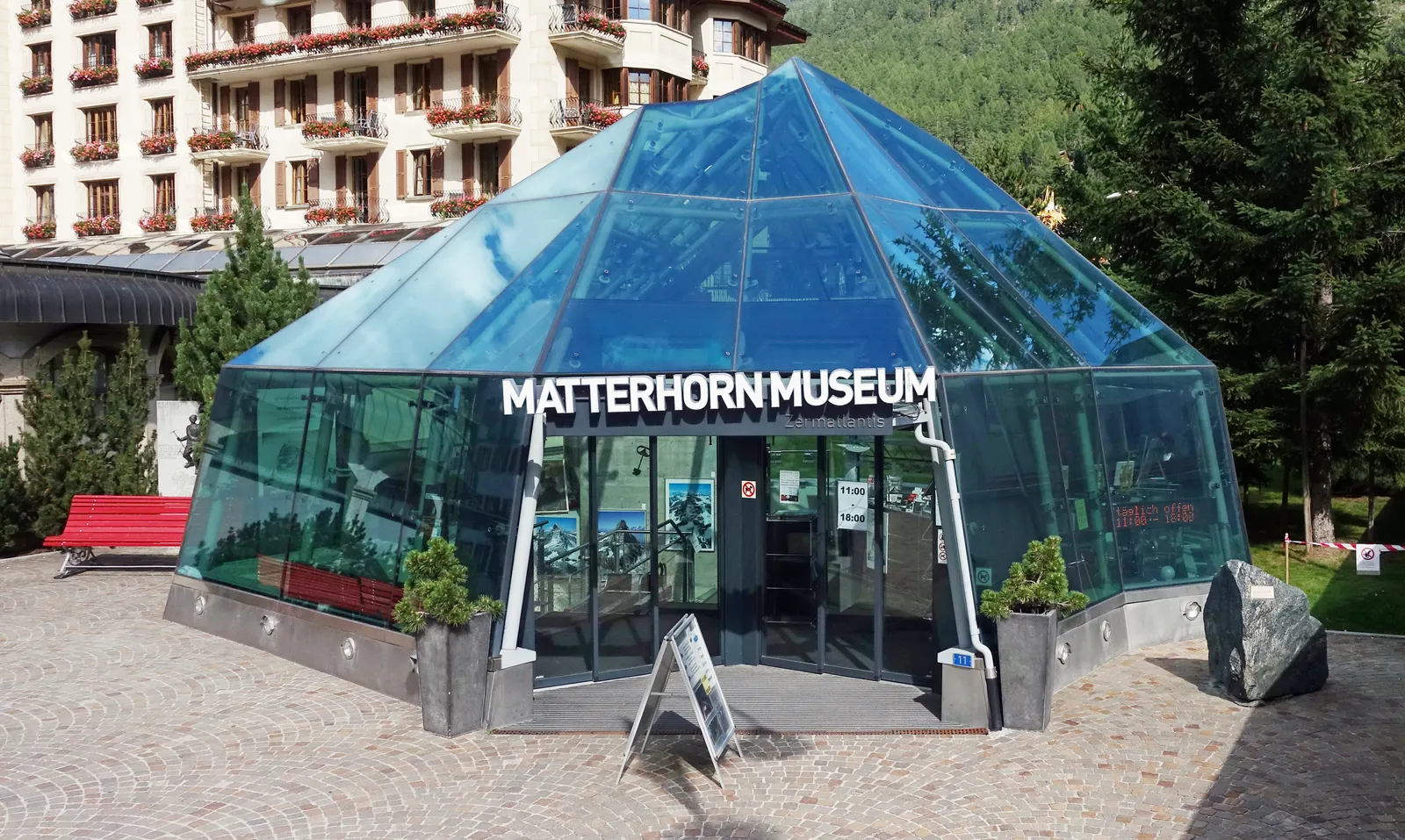
Photo: Tiia Monto / Wikimedia Commons · CC BY-SA 3.0
- ✓The Matterhorn Museum — branded 'Zermatlantis' — is built underground beneath the Kirchplatz, under a low glass dome you walk over before you go in.
- ✓Inside is a reconstructed village 'street' of real old Zermatt houses, so you wander a dimmed, life-size hamlet rather than reading wall panels.
- ✓Its most famous object is the broken rope from the 1865 first ascent — the rope that failed on the descent and cost four lives.
- ✓It is the village's standout rainy-day and culture stop, a few steps from the parish church and the mountaineers' cemetery.
A village under glass
Most museums announce themselves; this one almost hides. On the Kirchplatz, the square in front of the parish church, you cross a broad low dome of glass set into the paving — and only then realise the museum is beneath your feet. Descend, and you step into a deliberately dimmed, reconstructed fragment of old Zermatt: real timber houses, a smithy, a stable, a hotel salon, all rebuilt underground into a walk-through 'village' you move through as if it were dusk and everyone had just gone in for the night.
It is a genuinely clever piece of museum-making. Rather than line up artefacts behind glass, Zermatlantis lets you wander the lanes of a vanished settlement and lean into doorways. The objects — tools, furniture, climbing gear, photographs — sit in the rooms where they belong, so the farming village of the highlights tells its own story before the mountaineering chapter even begins. Allow more time than you expect; the half-light slows everyone down.
1865: the rope, the triumph and the tragedy
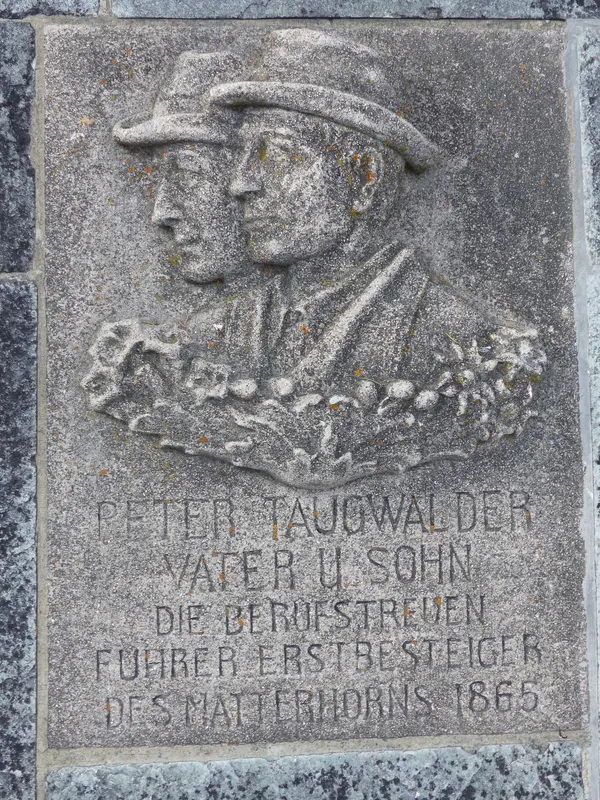
The emotional centre of the museum is the first ascent of the Matterhorn on 14 July 1865, and the catastrophe that followed it. A party of seven led by the English illustrator Edward Whymper reached the untrodden summit — the last great unclimbed peak of the Alps — only for disaster to strike on the way down. On the descent, one climber slipped, the rope linking the leading four to the rest snapped, and four men fell thousands of metres down the north face. Only Whymper and the two Taugwalder guides, father and son, survived.
The museum holds the broken rope itself — frayed, thin, almost ordinary — and it is hard to stand in front of it unmoved. Around it the exhibition lays out the race for the summit, the rivalry with the Italian side, the role of the local Zermatt guides who made the mountain climbable, and the long shadow the tragedy cast over the village and over Victorian mountaineering. It is the story that turned a farming hamlet into a world destination, told with the actual things that survived it.
- The first ascent: 14 July 1865, by Whymper's party of seven via the Hörnli ridge.
- The fall: the rope broke on the descent; four of the seven died.
- On display: the broken rope, climbing equipment of the era, and contemporary accounts and images.
- Why it matters: this single day made Zermatt — and modern alpinism — famous.
From farming hamlet to world destination
What makes Zermatlantis more than a shrine to one famous accident is the way it sets the 1865 drama inside the much longer story of the village itself. The reconstructed houses you walk through belonged to a community of mountain farmers — people who grew rye on terraces, drove cattle to the high alps, and had no particular interest in standing on summits. The museum lets you feel that world from the inside: the dark low rooms, the heavy tools, the smithy, the everyday objects of a hard subsistence life at 1,600 metres.
Then it shows you the hinge. When the British and other early alpinists arrived in the mid-19th century, hungry for unclimbed peaks, the villagers became the guides, porters and innkeepers of a new economy. The Matterhorn's first ascent was the spark, but the museum traces the slower transformation that followed: the first hotels, the railway up the valley, the slow tilt from cowbells to cable cars. Seeing the farming village and the resort village in the same underground space is the exhibition's quiet masterstroke — you leave understanding that today's Zermatt is only the latest layer of a much older place.
- The reconstructed houses show the subsistence farming village that existed before tourism.
- Tools, furniture and a smithy bring the pre-resort economy to life in situ.
- The exhibition traces the shift from farming to guiding, hotels and the railway after 1865.
- It frames the whole arc — cowbells to cable cars — in one underground walk-through.
Guides, gear and the craft of climbing
Alongside the human drama, the museum is a fine place to grasp how mountaineering actually worked — and how dangerous it was with the equipment of the day. Cases of period gear lay it bare: hemp ropes thinner and weaker than anything a modern climber would trust, hobnailed boots, primitive ice-axes and crampons, the alpenstocks that preceded them. Set against photographs of climbers on the ridges, the equipment makes the achievements look more astonishing and the accidents more inevitable.
Crucial, too, is the place given to the local guides — the Taugwalders and the generations who followed them. The Matterhorn was not conquered by gentleman amateurs alone; it was made climbable by Zermatt men who knew the rock, carried the loads and took the risks, often for clients whose names history remembered better than their own. The museum gives them their due, which deepens every part of the story. By the time you climb back up into daylight, the mountain at the head of the valley has stopped being a postcard and become a place with a human history written all over it.
The best depth on a rainy day
Zermatt sells itself on views, which makes a grey, low-cloud day feel like a wasted one. The Matterhorn Museum is the antidote. Being entirely underground, it is weatherproof by design, and it rewards exactly the slow, indoor, thoughtful mood that bad weather forces on you. An hour to ninety minutes here turns a write-off morning into one of the more memorable parts of a trip — and it deepens every later glimpse of the actual mountain, because you now know what you're looking at.
It also pairs naturally with the other quiet, cultural corners of the village. The reconstructed houses echo the real ones a few streets away in the Hinterdorf; the 1865 story leads straight up the hill to the graves of climbers in the mountaineers' cemetery; and the whole thing sits beside the parish church on the Kirchplatz. String those together and you have a complete bad-weather day that never leaves the village floor.
 Rainy day ZermattMuseums, spas, cafés, fondue and scenic trains for the days the cloud sits low on the Horu.
 Mountaineers' CemeteryWhere the human story of the 1865 ascent and a century of climbing continues, a short walk uphill.
 Old Village HinterdorfThe real timber houses the museum's underground 'street' is reconstructed from, two minutes away.
The objects that stay with you
Beyond the famous rope, the museum is full of smaller things that lodge in the memory because they are so ordinary and so charged. There are the lanterns and the studded boots, the early ice-axes that look more like garden tools than climbing gear, the faded summit photographs in which the climbers stare out stiffly from another century. There are everyday objects from the farming houses — a cradle, a cheese press, a carved chest — that say as much about endurance as any mountaineering relic. And there is the architecture of the place itself, the way the dim light and the reconstructed lanes make you lower your voice without being told to.
Curators understand that a single authentic object can do more than a wall of explanation, and Zermatlantis is built on that principle. You are not asked to absorb dates and statistics; you are invited to stand in a dark room beside the actual things people lived and died with, and to draw your own conclusions. That is why visitors so often emerge quieter than they went in, and why the museum punches far above the size of its underground footprint. It is, in the best sense, a place that trusts its objects — and trusts you to feel their weight.
- Period climbing gear — lanterns, studded boots, primitive axes — beside stiff Victorian summit photographs.
- Domestic objects from the farming houses: a cradle, a cheese press, a carved chest.
- The dim light and reconstructed lanes do as much as any label to set the mood.
- The museum trusts its objects to speak — and most visitors leave quieter than they arrived.
Frequently asked questions
A few practical points before you visit. Opening hours, ticket prices and any seasonal closures change, so confirm the current details on the official site or at the tourist office before you plan your day around them.
- Where is it? On the Kirchplatz, beside the parish church of St. Mauritius, in the centre of the village — a short walk from the station up the Bahnhofstrasse.
- How long should I allow? Most visitors spend about 60–90 minutes; the low lighting and walk-through design slow you down pleasantly.
- Is it good for a rainy day? Yes — it is entirely underground and weatherproof, and it is the village's leading bad-weather culture stop.
- Is it suitable for children? Older children and teens engage well with the reconstructed houses and the dramatic 1865 story; the dim lighting and serious subject suit attentive kids more than toddlers.
- Do I need to book? Generally you can buy a ticket on arrival, but verify hours and any group-visit rules in advance, especially in shoulder season.
- Is it accessible? The museum is below ground; check current step-free access details with the museum directly if mobility is a concern.
Making the most of a visit
A few small habits turn a good visit into a memorable one. Go in not knowing the 1865 story in detail, and let the exhibition tell it — the slow build to the summit, the moment of triumph, the snapped rope on the descent — so that the broken rope itself lands with full force when you reach it. Move slowly; the dimmed lighting and the walk-through houses are designed to be lingered in, not marched through, and the objects reward a second look. If you can, read a couple of the climbers' epitaphs in the cemetery first or afterward, so the names and the artefacts speak to each other.
Timing helps too. A grey morning is the museum's natural moment — it is the village's premier rainy-day stop precisely because it owes nothing to the weather outside. But it is also a fine first-day orientation in any conditions, because everything you see later on the mountain makes more sense once you know the human history beneath it. Families with older children or teenagers will find plenty to hold attention, from the reconstructed smithy to the gear and the drama of the first ascent; the subject is serious, but it is told vividly rather than dryly.
- Let the exhibition reveal the 1865 story rather than reading it up first — the rope hits harder that way.
- Move slowly; the low light and walk-through houses are built to be savoured.
- Best as a rainy-day stop or a first-day orientation that deepens every later mountain view.
- Engaging for older children and teens; the serious subject is told vividly, not dryly.
Rainy Day Zermatt
Museums, spas, cafés, fondue, hotel lounges, scenic trains, short walks and lift-backup logic for making the most of bad weather in the mountains.
Read guideMountaineers' Cemetery
A respectful guide to the graves of climbers who died on the Matterhorn and the high peaks around Zermatt — the human cost behind the postcard, beside the village church.
Read guide
Matterhorn Guide
A visitor's guide to seeing, photographing and understanding the Matterhorn — the Horu — without ever roping up: viewpoints, light, history and the small practicalities of the most famous mountain in the Alps.
Read guide