
Rainy Day Zermatt
Museums, spas, cafés, fondue, hotel lounges, scenic trains, short walks and lift-backup logic for making the most of bad weather in the mountains.

Photo: MountainAsh / Unsplash
- ✓When cloud sits on the valley, the underground Matterhorn Museum (Zermatlantis) is the obvious dry, interesting hour.
- ✓Spas and hotel pools turn a washout into the best rest day of the trip — many open to non-residents.
- ✓Bakeries, fondue stuben and long café afternoons are a feature, not a fallback, in a Swiss mountain village.
- ✓Weather can clear fast at altitude — keep one flexible viewpoint day and watch the live webcams.
First, read the mountain — it may not be a write-off
Bad weather in Zermatt is rarely uniform. The village floor sits at 1,608 m and the high stations climb past 3,800 m, so rain below can be cloud above, or cloud below can be brilliant sun above an inversion. Before you write the day off indoors, check the live webcams and the lift status: a grey morning in the village sometimes hides a clear glacier platform, and the Gornergrat cog or the Glacier Paradise cable car can lift you straight out of the murk.
If the whole valley is genuinely socked in, the opposite logic applies — don't burn a lift ticket on a view you can't see. That is the day to spend money on a museum, a spa or a long lunch instead, and save the headline viewpoint for the clear morning you've kept flexible. The single best rainy-day strategy in Zermatt is to never lock your weather-dependent plans until the forecast firms up.
- Check live webcams and lift status first — the high platforms may be above the cloud.
- Don't spend on a viewpoint you can't see; move it to your flexible clear-weather day.
- Inversions are common — sun at 3,000 m above grey at 1,600 m happens often.


Museums and indoor culture
The anchor wet-weather attraction is the Matterhorn Museum, also called Zermatlantis, set underground beneath the church square. You descend into a reconstructed old Zermatt street — barns, a smithy, period rooms — and follow the village's transformation from a poor mountain hamlet into the heart of golden-age alpinism. Its centrepiece is the dramatic story of the 1865 first ascent and the broken rope that killed four men on the descent, with the actual rope on display. It is genuinely absorbing and easily fills an hour or two.
Pair it with the free indoor-and-out stops nearby on a lighter shower day: the parish church, the small English Church, and the streets of the old Hinterdorf quarter under an umbrella. None of these need clear weather, and together they make a coherent 'history of the village' theme for the day.

Spas, pools and the art of doing nothing
A rainy day is the best excuse to use a Swiss mountain spa. Zermatt's hotels run some of the finest wellness areas in the Alps — pools, saunas, steam rooms and treatment menus, several of them with the Matterhorn framed in a window so you can watch the weather roll by from warm water. Some grander hotels open their spa to non-residents for a day pass, and many family hotels have a pool that turns a washout into a content afternoon for the children.
Even without a spa, the village rewards slowing down. Read a book in a hotel lounge by the fire, linger over a long lunch, and let the storm pass. Zermatt's whole appeal is the gear-shift away from a rushed itinerary, and weather that forces it on you is doing you a favour.
- Hotel spas: pools, saunas and steam — some sell day passes to non-residents (book ahead).
- Family hotel pools are an easy, dry win with children.
- Lounges, fires and long lunches — lean into the slowdown the weather imposes.

Cafés, fondue and a scenic-train backup
Eating well is a rainy-day activity in its own right here. The bakeries and cafés on and around the Bahnhofstrasse handle a slow breakfast or a mid-afternoon hot chocolate, and the village's fondue and raclette stuben turn a cold, wet evening into the most Swiss meal of the trip — book ahead in high season, as the cosy tables fill fast. A long, leisurely cheese dinner is exactly the right shape for a storm outside.
If you have the urge to still ride the rails, the Gornergrat cog railway is worth keeping in mind even in mixed weather: the ride itself is a spectacle, the upper restaurants are warm, and there is always the chance you climb above the cloud into sun. Treat it as a scenic train with a view bonus rather than a guaranteed Matterhorn — and check the webcams first so you go in with realistic expectations.
- Bakeries and cafés for a slow breakfast or an afternoon hot chocolate.
- Fondue and raclette stuben for the definitive wet-evening dinner — reserve in high season.
- Gornergrat as a scenic-train backup: warm, spectacular, and sometimes above the cloud.
 Best cafés & bakeries in ZermattWhere to settle in for a long, warm afternoon when the rain sets in.
 Gornergrat guideThe cog railway and upper restaurants — a scenic backup that can climb above the cloud.
 Best restaurants in ZermattFondue, raclette and the village's indoor dining for a stormy evening.
Shopping, chocolate and indoor browsing
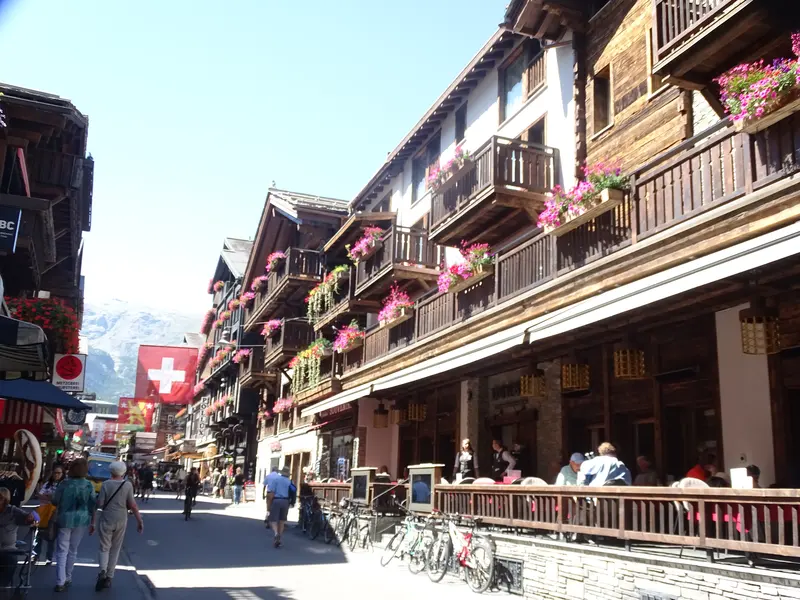
When the rain settles in for the afternoon, the Bahnhofstrasse becomes an indoor activity in its own right. Zermatt's main street is lined with shops that reward slow, dry browsing: Swiss watch and jewellery houses with windows worth lingering at, outdoor and ski-gear stores where you can sensibly kill an hour trying on the warm layer you forgot to pack, chocolatiers and delicatessens selling Valais specialities, and souvenir shops full of the village's woolly mascots. None of it needs a clear sky, and an umbrella and a coffee turn a washed-out afternoon into an easy, low-stress amble from awning to awning.
It is also the practical day to sort trip logistics you have been putting off. If you are skiing, a wet rest day is the moment to get boots refitted or swap rental gear; if you are shipping chocolate or watches home, the shops can usually advise on tax-free paperwork; and a leisurely stop at the bakery for a box of Walliser specialities makes a better souvenir than anything mass-produced. Think of the rain as permission to do the indoor, errand-shaped parts of the trip without feeling you are missing a mountain.
- The Bahnhofstrasse's watch, gear, chocolate and souvenir shops make for dry, easy browsing.
- A good day to refit ski boots or swap rental gear out of the weather.
- Local chocolate and Valais specialities beat mass-produced souvenirs.
- Use the time for the errand-shaped logistics a clear day would waste.
Rainy days by season
What 'rain' means in Zermatt depends heavily on the time of year, and so does the best response. In high summer, valley rain is often a passing afternoon thunderstorm rather than an all-day washout — the classic move is to front-load a hike or lift early, then retreat to a museum, café or spa when the clouds build after lunch, and re-emerge for a clear evening. Summer weather here can change within the hour, so a flexible, watch-the-sky plan usually beats abandoning the day outright.
In winter, low pressure in the valley frequently means heavy snow up high rather than rain, which is a gift for skiers and a reason to check whether the 'bad' weather is actually a powder day above the village. Genuine winter rain at village level tends to come with mild spells; that is the moment to lean hardest on spas, fondue and the museum and let the storm blow through. Shoulder seasons — late spring and autumn — bring the greyest, most persistent valley cloud, and those are the days the indoor and below-the-treeline options earn their keep. Whatever the month, the constant is the same: keep one weather-flexible viewpoint day in reserve, watch the webcams each morning, and spend the dull days on the things that are just as good wet as dry.
- Summer: rain is often a passing afternoon storm — hike early, shelter midday, re-emerge for evening.
- Winter: valley 'bad weather' is frequently a powder day up high — check before retreating indoors.
- Shoulder seasons bring the most stubborn grey — lean on spas, museums and long meals.
- Always keep one flexible viewpoint day and read the morning webcams.

At a glance — rainy day Zermatt
A quick wet-weather planning card. Confirm opening days, spa day-pass availability and lift status on the official sites — operations vary by season and conditions.
- First move: check webcams and lift status — the high stations may be above the cloud.
- Best dry attraction: the underground Matterhorn Museum (Zermatlantis).
- Best comfort: a hotel spa or pool, some open to non-residents on a day pass.
- Best meal: fondue or raclette in a village stube (book ahead in high season).
- Best scenic backup: the Gornergrat cog railway, weather permitting.
- Best free fallback: churches and the Hinterdorf under an umbrella.
- Always verify: museum and spa opening, day-pass policies and live lift status.
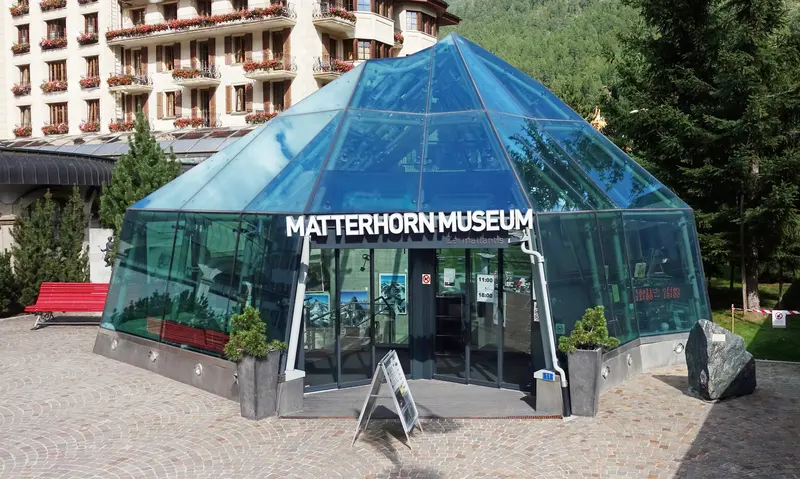
Matterhorn Museum (Zermatlantis)
Zermatt's museum is buried beneath the Kirchplatz: a reconstructed old village under glass, the drama of the 1865 first ascent, and one of the best rainy-day depths in the village.
Read guide
Spa hotels in Zermatt
How to choose a Zermatt spa hotel by what wellness actually means on a cold mountain trip — sauna and steam after a day at altitude, a warm pool with the Matterhorn in the window, treatment depth, and the difference between a couples' retreat and a family-friendly pool.
Read guideBest Cafés & Bakeries in Zermatt
Where to find good coffee, fresh pastries, dark Valais bread and Swiss chocolate in car-free Zermatt — the early-lift breakfast stops, the village bakeries on the Bahnhofstrasse, and the warm café breaks that rescue a cold or rainy day.
Read guideMore in Things to Do
6
Bahnhofstrasse Zermatt Guide
The spine of the car-free village — the shops, restaurants, hotels and après-ski energy of Zermatt's main street, with practical orientation from the station to the Matterhorn.
Read guide
Best Photo Spots in Zermatt
Matterhorn photo locations from the village bridges, Gornergrat, Riffelsee, Stellisee and Rothorn, with sunrise routes and reflection timing.
Read guide
Best Things to Do in Zermatt
A ranked, first-trip shortlist for a car-free resort under the Matterhorn — the ascents, walks, ski days and long mountain lunches worth building a trip around.
Read guide
Free Things to Do in Zermatt
Village walks, Matterhorn photo spots, churches, old Walliser houses, riverside paths and low-cost ways to enjoy an expensive alpine resort for nothing.
Read guide
Self-Guided Zermatt Village Walk
A gentle, step-by-step loop on the valley floor linking the station, the Bahnhofstrasse, the old timber Hinterdorf, the church and cemetery, the river bridges and the best Matterhorn angles.
Read guide
Swiss National Day in Zermatt
How Zermatt marks Swiss National Day on 1 August — flags and bunting on the Bahnhofstrasse, music and food, the lakeside gathering at Leisee, family planning and the village's car-free festivity beneath the Matterhorn.
Read guide