
Winter Activities for Non-Skiers
A full winter in Zermatt without clicking into skis — the Gornergrat cog to the high terraces, winter walking trails, sledging, spas, cafés and fondue, the museum and the scenic lifts that put you among the four-thousanders.

Photo: Martin Keller / Unsplash
- ✓You do not need to ski to have a wonderful Zermatt winter — the scenic lifts, winter walking trails, sledging, spas, cafés and museums fill a week on their own.
- ✓The Gornergrat cog and the Matterhorn Glacier Paradise cable car put a non-skier among the four-thousanders for the price of a ticket and a clear morning.
- ✓Zermatt keeps a network of prepared winter walking paths — packed snow trails you can walk in good boots with the peak for company.
- ✓It's a car-free village built for slowing down — read it by altitude, pick the clear-weather day for the big viewpoint, and fill the rest with warmth and views.
A Zermatt winter without skis
It is one of the happy secrets of Zermatt that the place is at least as rewarding for non-skiers as for skiers — and arguably more relaxing. The village is car-free, vertical and built for lingering, and the same lifts that carry skiers up the mountain carry anyone with a ticket to viewpoints, terraces and walking trails among the highest peaks in the Alps. Whether you don't ski, are recovering, are travelling with someone who does, or simply want a winter holiday of warmth and views rather than cold and effort, Zermatt has a full week in it without ever clicking into a binding.
The mental model is the same one that governs the skiing: read Zermatt by altitude, not address. The headline experiences are up high — the Gornergrat terrace, the Glacier Paradise viewing platform — and they depend on clear weather, so keep the big viewpoint flexible and spend it on the bluest morning. The rest of the day, and the rest of the week, fills itself with winter walks, a sledge run, a spa afternoon, a long fondue and the slow pleasure of a village with no traffic in it. The Matterhorn — the Horu, in the old Walliser tongue — anchors all of it, pink at dawn and gold at dusk, and you do not need skis to fall under its spell.

Ride the cog and the cable cars to the high viewpoints
The single best non-ski experience in a Zermatt winter is to ride up among the four-thousanders. The Gornergrat Bahn — Switzerland's first fully-electric cog railway, running since 1898 — climbs the rack from beside the main station to an open-air station at 3,089 m, level with the Matterhorn, the Dufourspitze and the Gorner glacier. You step out onto a snow terrace ringed by 29 four-thousanders, no skis required, and it is one of the great views in the Alps. Sit on the right going up for the Matterhorn; go on a clear, settled morning for the cleanest light and the fewest clouds on the peak.
On the far side of the valley, the cable cars climb the Matterhorn-side lifts up to Matterhorn Glacier Paradise at 3,883 m, the highest cable-car station in Europe, with a viewing platform and an ice attraction carved into the glacier. It is a thinner-air, more dramatic experience than the Gornergrat — closer to the high glacier world — and equally accessible to a non-skier with a ticket. Both rides are weather-dependent and the high station closes first when the wind gets up, so check the lift status, dress for real cold and altitude, and treat the clearest day of your trip as the day to go high.
 Gornergrat guideThe historic cog railway to the open-air station at 3,089 m — tickets, timing and weather strategy.
 Matterhorn Glacier ParadiseThe cable car to 3,883 m, the viewing platform and the glacier ice attraction — no skis needed.
 Matterhorn viewpointsEvery angle on the Horu by altitude, read across the lifts and stations.
Walk the prepared winter trails
Zermatt keeps a network of prepared winter walking paths — packed, marked snow trails you can walk in good boots while skiers slide past on the pistes. They are the non-skier's equivalent of the summer hiking network: many of them gain their height by lift, so you ride up to a station and walk a gentle, scenic traverse rather than climbing. The trails range from short strolls between mountain stations to longer panoramic routes, and several put you face to face with the Matterhorn the whole way. It is the best way to feel the winter mountain at your own pace, breathing the cold clean air, with a mountain restaurant waiting at the far end.
Down on the valley floor there are gentler walks too — riverside paths and the lanes out to the old hamlets — for days when you don't want the altitude or the weather is closed in. Wear warm waterproof layers and boots with real grip, take sun protection for the bright snow, and pick up a current winter trail map, because which paths are prepared and open changes with the snow and the season. Confirm the open trails and conditions with the tourist office before setting out, and turn back if the weather closes — these are real mountain paths, beautiful but to be respected.


Go sledging
If you want the thrill of the snow without the discipline of skiing, sledging is the answer. You ride a lift or the cog up, rent a proper runnered toboggan, and slide back down a marked snow run with the valley falling away in front of you. The Gornergrat side is the classic area, with the bonus that you can break the descent by hopping back on the cog at a mountain station — perfect for families pacing children or anyone wanting to warm up between runs. It is exhilarating, needs no lessons and no expensive kit, and is one of the most reliably joyful things a non-skier can do here.
It is, though, a fast activity on a real mountain run, so stay on the marked trails, keep your speed under control, dress warm with gloves and eye protection, and let younger children ride with an adult. Runs open only when there is enough snow and the surface is safe, so confirm what's currently running before you head up. See the dedicated sledging guide for where to rent, the run options and the full safety picture.
Spas, warmth and wellness
A Zermatt winter is also a wellness winter. Many of the village's hotels — particularly the grand and design houses on and above the Bahnhofstrasse — have spas, indoor pools, saunas and steam rooms, and several are open to non-residents for a day or an afternoon. There are few finer ways to spend a closed-in or simply cold day than soaking in a warm pool or sweating out a sauna with the snow falling and, in the best of them, the Matterhorn in the window. For couples this is the quietly luxurious heart of a non-ski trip: no early lifts, no cold toes, just heat, calm and the most romantic peak in the Alps watching over the steam.
Day-spa access, treatments and pool opening vary by hotel and season, and some require booking, so arrange it ahead and confirm details with the spa directly rather than relying on any quoted hours. A massage after a winter walk, or an afternoon in the water while the rest of the group skis, is the kind of slow pleasure Zermatt does best.

Cafés, fondue and the village evening
Eating and drinking is a non-ski activity in its own right in Zermatt, and a serious one. The mountain terraces — the Findeln hamlet above the village especially — are reachable by lift and the winter walking trails, and a long lunch on a sun-trap deck with the Matterhorn on the table is as much the point of the place as any piste. Down in the village, the bakeries and cafés along and around the Bahnhofstrasse handle breakfast, an afternoon hot chocolate and the warming pause between activities, and the wood-panelled stuben serve the cold-weather staples: fondue and raclette, melted and shared, with a glass of Valais wine. Book the popular spots ahead in high season.
The evening fills itself. The car-free streets are made for an after-dark wander past lit windows and the old timber houses, the hotel bars and wine lounges pour something warm by a fire, and the whole village is quiet enough that the loudest sound is your own boots on the snow. You can ease into the après-ski terraces and lounges without ever having skied — the energy is open to everyone — or keep it gentle with a fondue and an early night before tomorrow's clear-morning lift. Either way, the food and the hush are reasons enough to come.

Museums and the old village
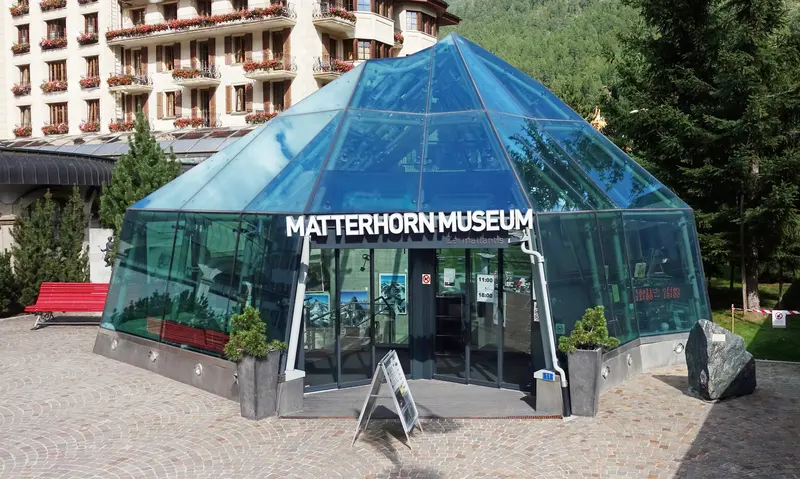
For a culture-and-history afternoon, the Matterhorn Museum — Zermatlantis — tells the story of the village, the first ascent of the Matterhorn in 1865 and the tragedy that followed on the descent, in an atmospheric underground reconstruction of an old Zermatt. It is the perfect indoor stop for a snowy or closed-in day, and it deepens every later look at the peak. Nearby, the old Hinterdorf quarter preserves a cluster of weathered timber granaries and houses raised on stone discs to keep the mice out — a few minutes' walk that carries you back centuries and makes a lovely short outing in the cold.
These low-level, indoor-friendly stops are the ballast of a non-ski week: the things you do when the high lifts are shut by wind, or when you simply want a slower, warmer day. They cost little, ask nothing of your fitness, and reward the curiosity that a week beneath such a famous mountain naturally stirs. Confirm museum opening hours for the season before you go.

At a glance
A quick menu for planning a non-ski winter. Treat all opening hours, lift running times and prices as evergreen and confirm with the official sources on the day — the weather and the season set the schedule.
- Scenic lifts: the Gornergrat cog to 3,089 m and the cable car to Matterhorn Glacier Paradise at 3,883 m — among the four-thousanders, no skis needed.
- Winter walking: a network of prepared, marked snow trails, many reached by lift, with the Matterhorn for company.
- Sledging: rent a toboggan, ride up, slide down a marked run — the Gornergrat side is the classic, family-friendly choice.
- Spas: hotel pools, saunas and steam rooms, several open to non-residents for a day — book ahead.
- Food: Findeln terrace lunches, village fondue and raclette, bakeries and cafés, and an après scene open to all.
- Culture: the Matterhorn Museum (Zermatlantis) and the old Hinterdorf quarter for indoor, low-level afternoons.
Where non-skiers should stay
Because Zermatt is car-free and small enough to cross on foot, a non-skier's base is less about lift access and more about warmth, comfort and the village at the door. Staying central, near the Bahnhofstrasse, puts the cafés, the fondue stuben, the museum and the cog railway within an easy walk — the things a non-ski day is built around. A hotel with a good spa and pool is doubly worth it on a non-ski trip, since a wellness afternoon becomes a headline activity rather than an extra. Couples often choose a room with a Matterhorn view, since the peak at dawn and dusk is a non-ski experience all on its own.
As ever, weigh the Täsch trade-off: staying down-valley buys easier parking and lower prices at the cost of a short shuttle and the loss of stepping straight into a car-free village. For a slow, warm, viewpoint-and-spa week, most non-skiers pay for the village and the hush. See the dedicated itinerary for how to string these days together around the weather.


Zermatt Winter Itinerary for Non-Skiers
A full no-ski winter plan beneath the Horu — the Gornergrat cog and Glacier Paradise as pure sightseeing rides, prepared winter walking and snowshoe trails, a sledge run, the Glacier Palace ice cave, the Matterhorn Museum, fondue and a long spa afternoon, all from a car-free village.
Read guide
Sledging in Zermatt
Where to sledge in and around Zermatt — the Gornergrat-area run and other options, how to rent a toboggan, whether it suits families and small children, and the snow conditions that govern it.
Read guide
Spa hotels in Zermatt
How to choose a Zermatt spa hotel by what wellness actually means on a cold mountain trip — sauna and steam after a day at altitude, a warm pool with the Matterhorn in the window, treatment depth, and the difference between a couples' retreat and a family-friendly pool.
Read guideMore in Ski & Lifts
6
Advanced & off-piste Zermatt
Zermatt's advanced terrain and off-piste reality — why this is glaciated high-mountain ground, when a guide is non-negotiable, avalanche awareness and the discipline the altitude demands.
Read guide
Après-Ski in Zermatt
Where the ski day softens into the evening — the high mountain bars caught in the last sun, the famous slopeside stops on the ski home, the village lounges and hotel terraces, and where to stay for the après energy.
Read guide
Beginner Skiing in Zermatt
Where beginners should ski in Zermatt — the sunny Sunnegga slopes and Wolli Park, ski schools and lessons, rentals, an honest answer to whether Zermatt is too ambitious for first-timers, and a step-by-step plan.
Read guide
Best ski hotels in Zermatt
How to choose a Zermatt ski hotel by what actually matters in winter — lift access, ski storage and boot rooms, spa quality, Matterhorn views and family convenience — in a car-free village you cross on foot.
Read guide
Gornergrat Ski Area
Zermatt's scenic central sector, reached by the historic cog railway — long sunny pistes around Riffelberg and Riffelalp, glacier and Monte Rosa panoramas, mountain restaurants and family-friendly cruising beneath the Horu.
Read guide
Intermediate skiing in Zermatt
The best Zermatt pistes for confident intermediates — which sectors cruise, where the long reds run, the Italy option, the mountain lunches and a lift strategy read by altitude and weather.
Read guide