
Zermatt Car-Free Arrival Day
A low-stress first day for a car-free village — parking and the shuttle at Täsch or arriving all the way by train, the luggage and hotel-cart transfer, finding your feet on the Bahnhofstrasse, a gentle village walk past the Hinterdorf and church bridge, and an easy first dinner beneath the Horu.

Photo: Claudio Schwarz / Unsplash
- ✓Zermatt has been car-free since 1961 — the public road ends at Täsch, so your last leg is always rails, not tyres.
- ✓Park at the Matterhorn Terminal in Täsch and take the shuttle (about 12 minutes), or come all the way by train via Visp and Brig.
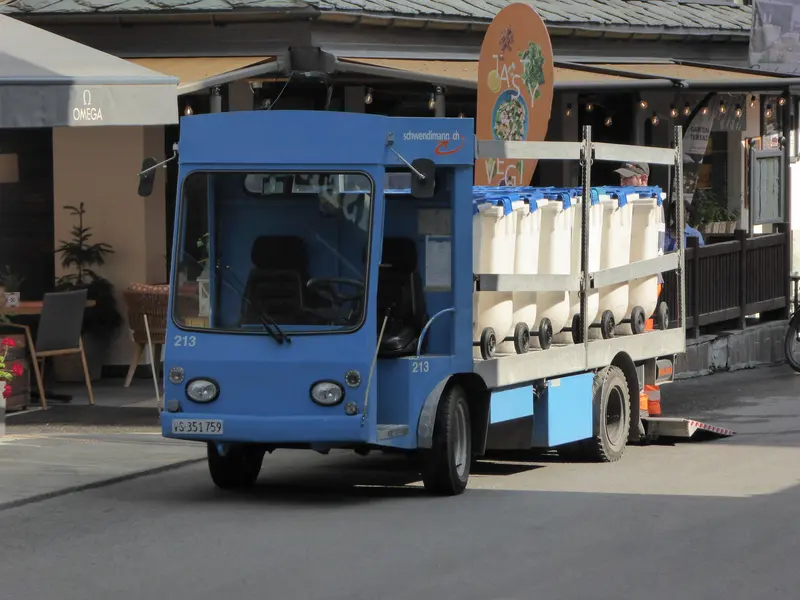
- ✓In the village it's silent electric taxis, e-buses and your feet; most hotels meet the train with an electric cart.
- ✓Keep arrival day flat — sort luggage, find your feet, walk the village, eat early, and acclimatise to 1,608 m.
Why the arrival deserves its own plan
Zermatt is different from the moment you arrive, and the arrival is the part first-time visitors most often get tangled in. The village has been car-free since 1961: no combustion cars are allowed in, the public road ends down the valley at Täsch, and your final approach is always by rail. That's a feature, not a hassle — the silence is half of why the place feels the way it does — but it means the logistics of bags, parking and the last leg need a little forethought rather than being something you improvise at the wheel. Get the arrival right and the trip starts relaxed; get it wrong and you spend the first afternoon flustered.
The other reason to give arrival day its own gentle shape is altitude and travel fatigue. The village floor sits at 1,608 m, and most people reach it after a long day of trains or driving. A flat first day — transfer, settle, a slow village walk, an early dinner — lets you acclimatise and find your bearings before the high lifts and big views of the days that follow. This plan is deliberately undemanding by design.

Choosing your last leg: Täsch shuttle or all the way by train
There are two clean ways to arrive, and deciding which before you leave home removes most of the stress. If you're driving, you take the car only as far as Täsch, the last village on the public road. Park at the Matterhorn Terminal Zermatt — a large covered car park built specifically for this — and walk a few steps to the platform for the shuttle train, which climbs the final stretch into Zermatt in around 12 minutes and runs frequently through the day. Buy the shuttle ticket at the terminal, keep your luggage with you, and you're in the village in a quarter of an hour.
If you'd rather not drive at all — often the calmest choice — you can arrive entirely by train. The Swiss rail network brings you to Visp or Brig on the main line, and from there the Matterhorn Gotthard Bahn runs up the valley through Täsch to Zermatt. It's a scenic, relaxed approach with no parking to think about, and for many it's the better way: you step off the train already in the car-free village. Either way, check the current timetables before you travel, and allow a comfortable margin for connections so a missed link doesn't sour the start.
- Driving: park at the Matterhorn Terminal in Täsch, then the shuttle train (~12 min) into Zermatt.
- All-train: main line to Visp/Brig, then the Matterhorn Gotthard Bahn up the valley to Zermatt.
- Buy the shuttle ticket at the Täsch terminal; keep luggage with you for the short ride.
- Check current timetables and leave a margin on connections — verify before travelling.


Step off the train: luggage and the hotel transfer
At Zermatt station the car-free rules take over completely. There are no private cars to flag and no road to roll a case along to a taxi rank as you might elsewhere — instead the village runs on silent electric taxis (small, low electric vehicles), electric buses on set routes, and the hotels' own electric carts. The single best thing you can do is arrange your hotel transfer in advance: most hotels will meet the train with an electric cart for your bags if you give them your arrival time, which turns the last few hundred metres into a non-event even in snow.
If you haven't arranged a pickup, the electric taxis wait at the station and the e-bus serves the main routes; for a central hotel, many people simply wheel their cases the short, flat distance through the village. Travel light if you can — Zermatt's streets are walkable but they're not built for hauling a fortnight of hard cases over snow and cobbles. With the bags handed over or stowed, the trip has properly begun, and the rest of arrival day is yours to take slowly.
- No private cars at all — only electric taxis, e-buses and hotel electric carts.
- Arrange your hotel transfer in advance; give them your arrival time for a cart pickup.
- Electric taxis wait at the station; the e-bus serves main routes for those without a pickup.
- Travel light — central hotels are an easy, flat walk; cobbles and snow don't love big cases.


Find your feet: the Bahnhofstrasse and a gentle village walk
Once you've dropped your bags — or while you wait for a room to be ready — give the afternoon to finding your bearings on foot, which is the loveliest way to arrive into Zermatt's rhythm. The Bahnhofstrasse runs from the station as the village's spine: bakeries for a first coffee and pastry, the watch, chocolate and outdoor-gear windows, the hotel lobbies and the gentle, unhurried bustle of a place where nobody is driving anywhere. Get your supermarket bearings here too (the Co-op and Migros) if you're self-catering or want picnic supplies for later days.
Then walk a slow loop of the old village. The Hinterdorf is a knot of centuries-old Walliser barns raised on stilts of weathered larch and round stone discs — atmospheric and quiet, just off the main street. The Kirchbrücke over the Matter Vispa gives the classic view straight down the street to the Matterhorn, the photograph that says you've arrived. The parish church and the Mountaineers' Cemetery beside it tell the human story of the peak. None of this asks anything of tired legs — it's flat, free, and exactly the right pace for a first afternoon while you acclimatise to the altitude.
- Walk the Bahnhofstrasse — bakeries, shops, and your supermarket bearings (Co-op, Migros).
- Loop the Hinterdorf old village — larch barns on staddle stones, just off the main street.
- Cross the Kirchbrücke for the down-the-street Matterhorn view — the arrival photo.
- Flat, free and gentle — the right pace while you acclimatise to 1,608 m.
 Zermatt village walkA flat, car-free circuit past the Hinterdorf, the church bridge and the river — the ideal first walk.
 The BahnhofstrasseThe village's main street — shops, bakeries and the orientation walk from the station.
 The old village (Hinterdorf)The centuries-old larch barns on stilts — the atmospheric heart of the car-free village.
An easy first dinner and an early night
Keep the first evening simple. Travel and a jump in altitude both blunt the appetite and the energy, so this isn't the night for the big fine-dining reservation — save that for when you're rested. A plate of rösti, a bowl of pasta, or a shared fondue at a cosy stube is exactly right: warming, unfussy and unmistakably of the place. Book ahead in high season, even for somewhere modest, because the village fills up. Then take the short, lamplit walk back through streets where the only sounds are footsteps and the river, and turn in early.
That early night is the practical heart of the whole arrival plan. Tomorrow is when the trip really opens up — the cog to Gornergrat, a first hike or ski morning, the headline view you'll have kept flexible for the clearest sky. Arriving relaxed, fed and acclimatised, with your bearings already found, is the best possible launch pad. The car-free village rewards an unhurried start, and a calm arrival day sets the tone for everything that follows.
- Keep dinner simple — rösti, pasta or a shared fondue; save fine dining for a rested night.
- Book ahead in high season, even for a modest table; the village fills up.
- Turn in early — altitude and travel tire you; tomorrow is the first big day.
- A calm, acclimatised arrival is the best launch pad for the headline lifts and views.


At a glance — car-free arrival day
A low-stress first-day framework. The car-free logic and the village geography are evergreen; shuttle and rail timetables, the Täsch terminal details, electric-taxi and e-bus services, hotel transfers and prices all change — confirm the specifics on the official sites and with your hotel before you travel.
- Car-free since 1961 — the public road ends at Täsch; the last leg is always by rail.
- Driving: park at the Matterhorn Terminal in Täsch, shuttle train (~12 min) up.
- All-train: main line to Visp/Brig, then the Matterhorn Gotthard Bahn to Zermatt.
- At the station: electric taxis, e-buses, hotel carts — arrange your transfer in advance.
- Find your feet on the Bahnhofstrasse; loop the Hinterdorf and the Kirchbrücke view.
- Easy first dinner (rösti/fondue), early night, acclimatise to 1,608 m.
- Travel light; leave a margin on connections; keep tomorrow for the headline view.
- Verify timetables, transfers and prices before travelling.

How to Get to Zermatt
Every way into car-free Zermatt — the all-rail journey via Visp and Brig, the car-to-Täsch option with the shuttle, the routes from Zurich, Geneva and Milan, luggage logistics and how to plan the final approach.
Read guide
Täsch Parking & Zermatt Shuttle
How to use the Matterhorn Terminal in Täsch — covered parking, the 12-minute shuttle train into car-free Zermatt, how luggage is handled and how to time the transfer so the last leg is effortless.
Read guideSelf-Guided Zermatt Village Walk
A gentle, step-by-step loop on the valley floor linking the station, the Bahnhofstrasse, the old timber Hinterdorf, the church and cemetery, the river bridges and the best Matterhorn angles.
Read guideMore in Itineraries
6
Five days in Zermatt
A fuller, unhurried plan for the car-free village — two headline mountain days, a proper hike or ski day, a rest-and-village day, a day trip by the Glacier Express or over to the lakes and gorges, and the weather flexibility to move any of it to the right morning.
Read guide
Luxury Zermatt Itinerary
A high-end three-to-four-day plan beneath the Horu — a Matterhorn-view suite you wake in at dawn, a hotel spa, a private cog ride to Gornergrat, a guided mountain day, fine dining, and the arrival by Glacier Express — built on the village's quiet, restrained luxury of larch, stone and silence.
Read guide
One Day in Zermatt
A realistic single-day plan for Zermatt — one decisive big-view lift (Gornergrat or Glacier Paradise), time in the car-free village, the best photo stops, and the car-free logistics that make a day-trip work.
Read guide
Three Days in Zermatt
A deeper three-day plan — both flagship lifts, Gornergrat and Glacier Paradise, a proper hike or ski morning, the best restaurants, a spa afternoon and the unhurried village time that makes the car-free valley sing.
Read guide
Two Days in Zermatt
A balanced 48 hours beneath the Horu — one headline lift, a contrasting second mountain or an easy hike, the best of the village, two long meals and the room to flex around the weather.
Read guide
Weekend in Zermatt
A Friday-to-Sunday plan for the car-free village — arrival via Täsch or the train, the hotel timing that smooths the first evening, one decisive mountain day flexed to the forecast, and the slow, well-fed Sunday that sends you home unhurried.
Read guide