
Trail Running in Zermatt
How to run the trails around Zermatt — the lift-served routes and high traverses, the altitude and the training reality, the famous mountain races, and the safety sense that high-alpine running demands.

Photo: Michal Kučera / Unsplash
- ✓Over 400 km of marked trails climb from a car-free village at 1,608 m to ridges and glaciers above 3,000 m — a serious altitude playground.
- ✓The lifts let you choose your effort: run a downhill traverse from a high station, or earn the height on foot.
- ✓Altitude is the defining factor — pace honestly, acclimatise, and respect how thin the air feels above 2,500 m.
- ✓Zermatt hosts world-class mountain races; even off race day, the same routes draw runners from across the Alps.
Running a four-thousander's back yard
For a trail runner, Zermatt is close to ideal terrain and close to a serious test, often on the same outing. More than 400 km of marked trails fan out from the car-free village on the valley floor at 1,608 m, climbing through larch forest and high meadow to ridges and glacier edges above 3,000 m, ringed by some of the highest peaks in the Alps. You can run almost any shape of day here — a gentle valley loop, a long downhill traverse off a lift, or a lung-bursting climb to a high col — and the Matterhorn is somewhere in the frame for most of them. It is the kind of place that turns an ordinary training run into something you remember for years.
The factor that shapes everything, though, is altitude. Running here is not flat-land running with better scenery: the village floor is already high, the trails climb fast, and above 2,500 m the air is noticeably thinner, so paces that feel easy at home become hard work and recovery takes longer. The reward for respecting that is enormous — but the mountain does not grade on effort, and the same routes that delight a prepared, acclimatised runner can punish one who arrives expecting their sea-level pace to hold.
This guide reads the running the way you would actually plan it: how to use the lifts to choose your effort, the kinds of route the network offers, the altitude and training reality, the famous races that draw runners here, and the safety sense that high-alpine running demands. None of it is meant to put you off — only to make sure the mountain gives back as good as it asks.

At a glance: planning a running trip
A quick orientation before you lace up. The altitude, the lift-served structure and the trail-grade system are evergreen; race dates, exact trail status and the summer lift calendar change year to year, so confirm them before you commit a route or a trip.
- Altitude: village floor 1,608 m, trails to over 3,000 m — pace and acclimatise accordingly.
- Use the lifts: run a downhill traverse from a high station, or earn the climb on foot.
- Surface: Swiss waymarking grades the trails — yellow (easy), white-red-white (mountain), white-blue-white (alpine).
- Season: roughly June to October, with snow lingering high early and short days late.
- Races: Zermatt hosts world-class mountain races — see the dedicated guides below.
- Carry: layers, a windproof, water, food, a charged phone and the day's weather and lift check.
- Pace honestly: thin air above 2,500 m makes easy efforts feel hard; recovery is slower.
- Weather: summer afternoon storms build fast — run early, be off the tops by mid-afternoon.
Let the lifts set your effort
The single most useful trick for running Zermatt is the same one that makes its hiking so generous: use the lifts to choose how much climbing you do. Ride the Sunnegga Express funicular, the Gornergrat cog railway or a cable car to a high station, and you can run a long, gentle downhill or rolling traverse with the altitude already gained — perfect for a flowing, view-rich run that is hard on the quads but kind on the lungs. The Sunnegga-side lake paths and the Gornergrat ridge, with its train stops at Rotenboden, Riffelberg and Riffelalp, are made for exactly this: start high, run down, ride or hop a train back.
Or do the opposite. If you are training for vertical, the climbs from the village to Sunnegga, to Furi and beyond, or up towards the Gornergrat give you sustained, runnable ascent with an honest gradient and a glorious destination — and you can always ride a lift back down to save your knees. The beauty of the network is that it lets a runner dial effort precisely: a recovery shuffle on the valley floor, a downhill cruise off a lift, or a brutal uphill rep on the way to a ridge, all from the same small village.


Reading the routes — and the trail grades
Swiss trails are waymarked by difficulty, and for a runner the colour codes are a safety tool as much as a planning one. Yellow signs mark easy hiking paths — good, runnable surface for most fitness levels. White-red-white marks mountain trails that are steeper, rougher and more exposed, where you will be moving over rock, roots and uneven ground and where running fast is genuinely risky. White-blue-white marks alpine routes that demand real mountain experience and have no business being run by anyone not equipped and skilled for serious terrain. Match your route choice and your pace to the grade, and read the signs at the trailhead rather than assuming.
Within that framework the network gives you everything: smooth meadow and forest paths low down for tempo and recovery; long, technical mountain traverses on the white-red-white trails for strength and skill; and big vertical for climbing reps. The runnable gems are the lift-served traverses — the lake paths above Sunnegga, the Gornergrat ridge down towards Riffelberg and Riffelalp — where the gradient is kind, the footing is mostly good, and the views are extraordinary. Save the rougher, more exposed lines for when your legs and your altitude-legs are both ready.
Altitude, acclimatising and pacing honestly
Altitude is the thing first-time visitors most often underestimate. Zermatt's village floor is already higher than many people ever run, and the trails climb quickly into air that is meaningfully thinner; above 2,500 m an easy effort feels hard, your heart rate sits higher for the same pace, and recovery between hard sessions is slower. The fix is patience: give yourself a day or two of easy running before any hard or high effort, drink more than you think you need, eat well, and pace by feel and heart rate rather than by the splits you would expect at home. Ego is the enemy here — the runners who struggle most are usually the ones who refuse to slow down.
Treat the first high run as a recce, not a race. Run conservatively, notice how the altitude feels on the climbs, and build up over a few days rather than going straight for the longest, highest route on day one. Done that way, the thin air becomes part of the experience and even a contributor to fitness, rather than the thing that ruins a long-planned trip. Acclimatisation is real, it works, and it costs you nothing but a little discipline early on.

The races — running Zermatt at speed
Zermatt is a name in the mountain-running world, and for many runners a race here is the goal that shapes the whole trip. The valley hosts world-class events that climb and traverse the same trails described above, drawing competitive and recreational runners from across the Alps and beyond into the high, demanding terrain below the Matterhorn. Even if you are not racing, training on the courses — or simply running the same ground out of season — connects you to that history and to a community that takes mountain running seriously.
If a race is your aim, plan around it well in advance: the dates, the entry, the course profile and the altitude all demand specific preparation, and the most popular events fill up. Build your trip so you arrive with time to acclimatise, treat the early days as adaptation rather than peak training, and use the lift-served traverses to learn the terrain at an honest pace before race day. The dedicated race guides below cover the headline events in detail.
Season, weather, kit and safety
The running season runs roughly June to October. Early summer can leave snow on the higher traverses and the upper trails only just clear; July and August are warm, busy and prone to afternoon thunderstorms that build fast over the peaks; late September and October bring golden larches, thinner crowds and the clearest, coldest light, but shorter days and the first snows. Run early to beat the heat and the storms, be off the high ground by mid-afternoon, and remember that the lifts which let you choose your effort run to a seasonal calendar — confirm the stations you need are open before you plan a route around them.
High-alpine running is self-reliant running. However light you like to travel, carry layers including a windproof, more water than you expect, some food, a charged phone, and check the morning's weather, trail status and lift times. The weather can turn cold and violent quickly at altitude even in midsummer, the terrain is unforgiving of a fall far from help, and a closed lift can turn a planned downhill into a long climb out. Run within your ability and your acclimatisation, keep a margin, and let the mountain — not the watch — set the terms. Get that balance right, and Zermatt offers some of the finest trail running in the Alps.
- Season: roughly June–October; snow lingers high early, days shorten late.
- Run early — beat the heat and the afternoon thunderstorms; be off the tops by mid-afternoon.
- Carry layers, a windproof, water, food and a charged phone, even for short runs.
- Check weather, trail status and the lift calendar the morning you run.
- Respect the trail grades and your acclimatisation — pace honestly and keep a margin.

Matterhorn Ultraks
Plan a Matterhorn Ultraks weekend — the late-summer trail-running event on Zermatt's high paths. Distances, the course, weather and altitude, hotels, spectating and the safety sense the mountain demands.
Read guide
Gornergrat Zermatt Marathon
How to plan a Zermatt Marathon weekend — the uphill course that climbs from the valley to Riffelberg, the distances, the logistics of a car-free finish at altitude, hotels, spectating and recovery beneath the Matterhorn.
Read guide
Zermatt Hiking Safety
What to know before you walk in Zermatt's high alpine terrain — weather, altitude, snowfields, footwear, trail markings, the last lift down, glacier caution and when a marked trail still needs a guide.
Read guideMore in Hiking & Summer
6
Best Family Hikes in Zermatt
Child-friendly hikes in Zermatt chosen by lift access, gentle effort, picnic and lake stops, playground rewards and an easy weather backup — so the whole family enjoys the mountain.
Read guide
Best Gornergrat Hikes
Scenic walking off the Gornergrat cog railway, where every intermediate station is an escape. The ridge descent to Riffelsee and Rotenboden, the longer Riffelberg and Riffelalp routes, and how the train-stop flexibility lets you walk as much or as little as the day allows.
Read guide
Best Hikes in Zermatt
A comparison of Zermatt's finest walks read the way the valley works — by altitude, lift access and weather. The Five Lakes loop, the Matterhorn Glacier Trail, the Gornergrat ridge and the gentler valley paths, ranked by difficulty, view and who they suit.
Read guide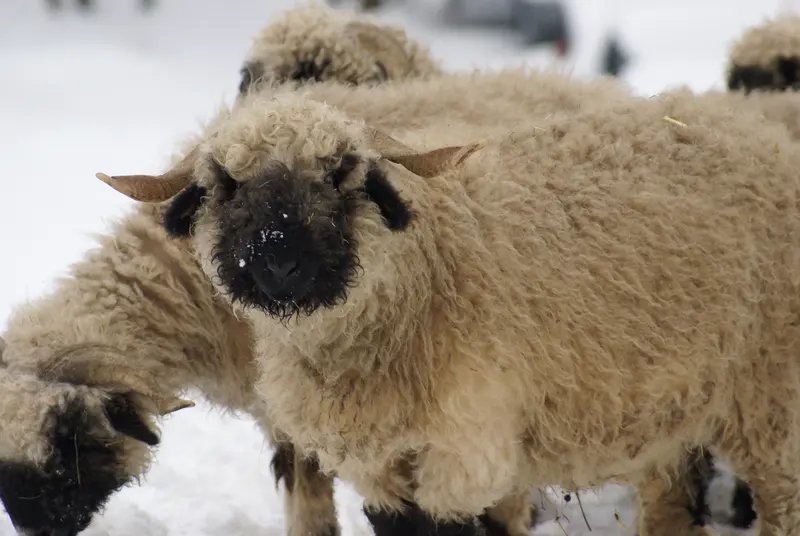
Blacknose Sheep in Zermatt
Where and when to meet the Valais Blacknose — the curly-horned, black-faced sheep of the Matterhorn valley — and how to watch them with respect.
Read guide
Charles Kuonen Suspension Bridge
How to reach and walk the Charles Kuonen suspension bridge above Randa near Zermatt — rail access, the climb from the valley, the bridge itself, head-for-heights notes and weather sense.
Read guide
Easy Walks in Zermatt
Gentle, low-effort walks in and above Zermatt — the village and riverside, the Furi forest, Riffelalp's level paths and the Sunnegga-area strolls — for non-hikers, families and mixed-ability groups.
Read guide