
Charles Kuonen Suspension Bridge
How to reach and walk the Charles Kuonen suspension bridge above Randa near Zermatt — rail access, the climb from the valley, the bridge itself, head-for-heights notes and weather sense.

Photo: VishnuVaratharajan / Wikimedia Commons · CC BY-SA 4.0
- ✓One of the world's longest pedestrian suspension bridges, strung high above the Grabengufer ravine near Randa, down-valley from Zermatt.
- ✓Reached by train to Randa (a few minutes from Täsch) followed by a steep, sustained climb on the Europaweg.
- ✓It is a genuine mountain hike, not a stroll — expect a long uphill grind and real exposure on the span.
- ✓Best done as a clear, settled-weather day trip; the bridge can close in high wind.
What — and where — it is
The Charles Kuonen suspension bridge is the kind of structure that sounds like an exaggeration until you stand on it: an exceptionally long pedestrian span, hung high above the deep Grabengufer ravine on the slopes above Randa, the village a few minutes down-valley from Täsch and Zermatt. When it opened it was billed as the longest suspension footbridge in the world, and even now that other contenders have appeared, it remains one of the longest and most spine-tingling crossings in the Alps — a thread of steel and timber suspended over a great empty gulf of air, with the valley floor far, far below.
It is part of the Europaweg, the high two-day traverse that links Grächen and Zermatt along the eastern flank of the valley. The bridge was built to replace a section of that route repeatedly damaged by rockfall, which tells you something important: this is serious, rugged mountain terrain, and reaching the bridge means earning it. For most visitors based in Zermatt it is a full day out — a train ride down the valley and a long, steep climb up — rather than a quick photo stop.
How to get there from Zermatt
From car-free Zermatt the journey starts, as ever, on the rails. Take the train down the valley to Randa — it lies between Täsch and St Niklaus on the Matterhorn Gotthard Bahn line, a short ride from Zermatt — and get out there. From Randa the route to the bridge climbs steeply up the valley side on a marked trail that joins the Europaweg. There is no lift to shortcut this; the height gain is done on foot, and it is substantial.
Because the bridge sits on the Grächen-side traverse, there are two common ways to experience it. The straightforward day-trip version is an out-and-back from Randa: climb up to the bridge, cross it (and recross it), and descend the same way. The grander version is to walk a longer section of the Europaweg, which links into the multi-day Grächen-to-Zermatt route — only for fit, experienced mountain walkers with the time and the weather for it. For a single day from Zermatt, the Randa out-and-back is the realistic plan.
At a glance
The essentials before you commit a day to the bridge. Times and effort are evergreen guidance; confirm the current train timetable, the trail's seasonal opening and the day's mountain weather before you set out, and never attempt the climb if the forecast is unsettled.
- Where: above Randa, down-valley from Täsch, spanning the Grabengufer ravine.
- Access: train to Randa, then a steep climb on foot to the Europaweg.
- Effort: a sustained uphill grind — a proper mountain hike, not a walk.
- Exposure: significant; the bridge is long, high and open to the wind.
- Season: snow-free summer to autumn only; the high trail closes in winter (verify).
- Footwear: proper hiking boots, plus layers, water and food.
- Head for heights: essential — the span is not for those who fear exposure.
- Time: budget a full day from Zermatt, with an early start.
How to do it: a step-by-step plan
Treat this as a planned mountain day, not an impulse. The sequence that works for most fit walkers based in Zermatt is straightforward, but each step matters.
- Watch the forecast for a clear, settled, low-wind day, and check the trail is in season and open.
- Take an early train down the valley to Randa, leaving plenty of daylight for a long climb.
- From Randa, follow the marked trail signs up towards the Europaweg and the bridge; pace the steep ascent steadily and drink regularly.
- At the bridge, take your time — cross deliberately, hold the handlines, and don't crowd the deck in wind.
- Turn back with enough margin to descend in good light; do not be tempted onward onto the full multi-day Europaweg unless you are equipped and committed.
- Descend to Randa and catch the train back up to Zermatt before evening.

Crossing it: the experience, and the nerves
There is no soft way to say it: the bridge is exposed, and that is the entire point. The deck is narrow, the handlines are at hand-height, and beneath the open mesh the ground falls away into the ravine. In still conditions it is exhilarating rather than frightening — a long, steady walk through the air with the mountains spread around you. In wind it moves, and the movement is what catches even confident people out. If you have a genuine fear of heights, this is one Zermatt highlight that may not be for you, and that is fine; the view from the approach trail is reward enough.
Cross deliberately and let faster walkers pass at the anchors rather than on the open span. Keep both hands free for the handlines — stow the phone for the crossing and take your photos from solid ground at either end or from the trail, where the bridge reads as the impossibly thin thread it is. If a group is bunching up, wait; the bridge feels steadier with fewer people on it, and there is no prize for rushing.
Weather, season and the safety margin
Two things will define your day: the weather and the season. The bridge and its approach trail are a high-mountain, snow-free-season proposition — broadly summer into autumn — and the route is closed or impassable in winter and when snow lingers. Within the season, this is emphatically a fair-weather outing. High wind can close the bridge, thunderstorms build fast on summer afternoons, and the exposed climb offers little shelter, so an early start and a settled forecast are not optional niceties but the core of doing this safely.
Carry the kit a long mountain day demands — boots, layers, rain protection, sun protection, plenty of water and food — and keep a margin of daylight in hand for the descent. Always confirm the current status before you travel: train times down the valley, the trail's seasonal opening, and whether the bridge is open on the day. The reward for getting all of that right is one of the most memorable walks anywhere near Zermatt; the cost of getting it wrong, on terrain this exposed, is real.
- Go only on a clear, settled, low-wind day; turn back if the weather changes.
- Start early to beat afternoon storm build-up and to bank descent daylight.
- Summer-to-autumn season only; the high trail is closed or snowbound in winter.
- Carry full mountain kit: boots, layers, rain and sun protection, food and water.
- Confirm train times, trail opening and bridge status before you set out.

Randa from Zermatt
A quiet down-valley day from car-free Zermatt: rail access to Randa, the Charles Kuonen suspension bridge above the village, gentler valley-floor walks and the calm of a working Walliser hamlet beneath the great rock walls.
Read guide
Day trips & add-ons from Zermatt
The hub for everything within reach of car-free Zermatt — the cross-border crossing to Cervinia in Italy, the suspension bridge at Randa, the Täsch terminal, neighbouring Saas-Fee, the Rhône-valley towns of Visp, Brig and Sion, the Aletsch glacier, the start of the Glacier Express, and the long haul to St Moritz — read by distance, effort and the kind of day you want.
Read guide
Zermatt Hiking Safety
What to know before you walk in Zermatt's high alpine terrain — weather, altitude, snowfields, footwear, trail markings, the last lift down, glacier caution and when a marked trail still needs a guide.
Read guideMore in Hiking & Summer
6
Best Family Hikes in Zermatt
Child-friendly hikes in Zermatt chosen by lift access, gentle effort, picnic and lake stops, playground rewards and an easy weather backup — so the whole family enjoys the mountain.
Read guide
Best Gornergrat Hikes
Scenic walking off the Gornergrat cog railway, where every intermediate station is an escape. The ridge descent to Riffelsee and Rotenboden, the longer Riffelberg and Riffelalp routes, and how the train-stop flexibility lets you walk as much or as little as the day allows.
Read guide
Best Hikes in Zermatt
A comparison of Zermatt's finest walks read the way the valley works — by altitude, lift access and weather. The Five Lakes loop, the Matterhorn Glacier Trail, the Gornergrat ridge and the gentler valley paths, ranked by difficulty, view and who they suit.
Read guide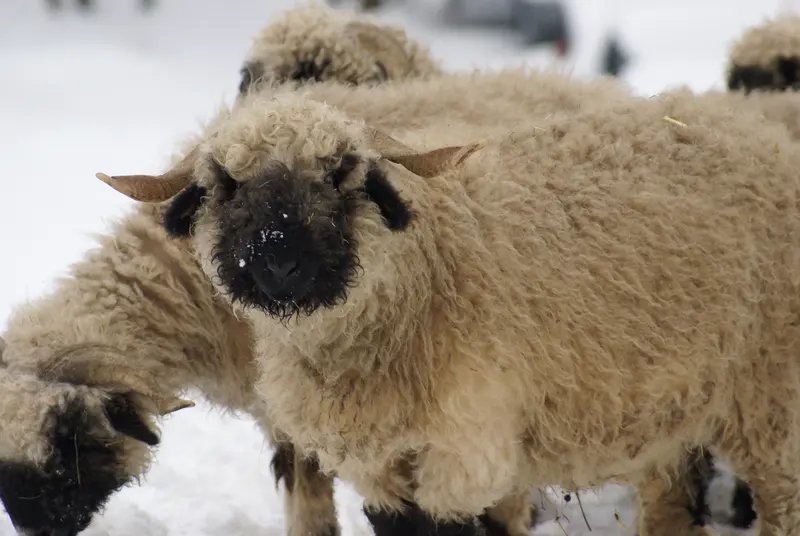
Blacknose Sheep in Zermatt
Where and when to meet the Valais Blacknose — the curly-horned, black-faced sheep of the Matterhorn valley — and how to watch them with respect.
Read guide
Easy Walks in Zermatt
Gentle, low-effort walks in and above Zermatt — the village and riverside, the Furi forest, Riffelalp's level paths and the Sunnegga-area strolls — for non-hikers, families and mixed-ability groups.
Read guide
Five Lakes Walk Guide
Zermatt's most-loved easy hike, lake by lake — how to reach the start by funicular and gondola, which way to walk, where the Matterhorn reflects, how long it takes and the dawn timing that makes the picture.
Read guide