
Schwarzsee-Matterhorn Ski Area
Skiing the Matterhorn side of Zermatt — up via Furi to Schwarzsee beneath the great faces, long descents back to the village, and the link upward toward Trockener Steg and Glacier Paradise.

Photo: Kevin Schmid / Unsplash
- ✓The Schwarzsee–Matterhorn sector skis directly beneath the Matterhorn's east and north faces — the most dramatic backdrop on snow in the Alps.
- ✓Reach it by cable car from the village via Furi to Schwarzsee at 2,583 m, the western, Matterhorn-facing side of the lift network.
- ✓It is a junction sector: pistes funnel down to Furi and the village, and link upward toward Trockener Steg and Matterhorn Glacier Paradise.
- ✓Long descents and good intermediate-to-advanced cruising under the Horu — verify cable-car status and piste conditions before you ride.
Skiing in the shadow of the Matterhorn
If the Sunnegga side is Zermatt's sunny nursery and Gornergrat its scenic spur, the Schwarzsee–Matterhorn sector is the dramatic one — the western flank of the ski area that climbs directly under the Matterhorn's own faces. At Schwarzsee, the cable-car balcony at 2,583 m, the great east and north walls rise almost vertically overhead, near enough to trace the Hörnli ridge that climbers follow to the summit. Skiing here means carving down with that immense grey pyramid filling the sky above you rather than standing across a valley from it. For sheer theatre, no other sector in Zermatt comes close.
This is mid-mountain skiing with a serious view and a serious role. Schwarzsee is a junction as much as a destination: it links the lower, forested slopes around Furi with the higher glacier terrain toward Trockener Steg and, ultimately, Matterhorn Glacier Paradise. That makes it a sector you pass through and shape a day around as much as one you lap for its own sake — though the long descents from here back toward the village are a genuine pleasure in their own right, and the backdrop never stops being extraordinary.
Getting up — via Furi to Schwarzsee
Access to the Matterhorn side begins at Furi, the busy lower junction reached by cable car or gondola from the western edge of the village. Furi sits in the trees at the foot of the sector and acts as the gateway both to Schwarzsee above and to the glacier terrain beyond. From Furi a cable car climbs to Schwarzsee at 2,583 m, stepping you out onto open alpine ground beneath the peak, beside the dark tarn and the little chapel of Maria zum Schnee that give the place its name and much of its romance.
From Schwarzsee the pistes drop back toward Furi and on to the village, while the onward lifts carry you up the western flank toward Trockener Steg and the glacier. Because the sector strings several lifts together and links into the high glacier terrain, the timetable and the conditions board matter: note the last lift and the last reliable descent, and check the official status before you ride, since the upper links answer to the weather and can close in wind even when Schwarzsee itself is open.
 SchwarzseeThe chapel, the dark tarn and the closest easy view of the Matterhorn's east face.
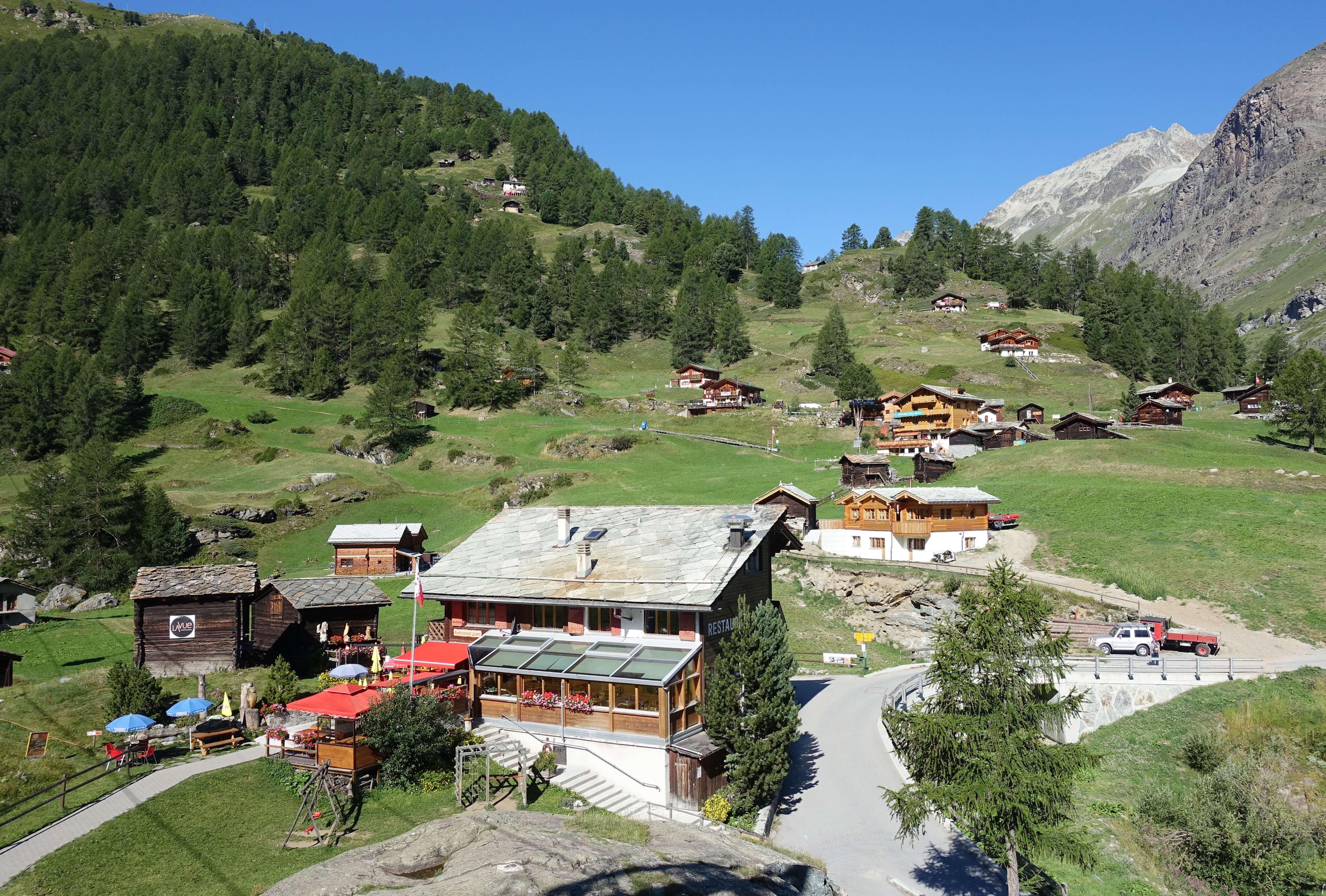 Furi & the Gorner GorgeThe lower junction at the foot of the Matterhorn side, gateway to Schwarzsee and the glacier.
 Klein MatterhornThe 3,883 m glacier summit the sector links up toward — altitude and the high ice world.
At a glance
A quick orientation to the sector. Treat every figure as evergreen and confirm cable-car running times, piste status and pass options with the official sources on the day.
- Sector: Schwarzsee–Matterhorn, the western, Matterhorn-facing side of Zermatt's ski area.
- Key station: Schwarzsee at 2,583 m, directly beneath the Matterhorn's east and north faces.
- Access: cable car from the village via Furi, the lower junction at the foot of the sector.
- Role: a junction linking the village and Furi below with Trockener Steg and Glacier Paradise above.
- Best for: intermediates and advanced skiers wanting long descents and the most dramatic backdrop.
- Landmark: the chapel of Maria zum Schnee beside the dark Schwarzsee tarn.
- Season: roughly late November to April for the valley pistes — verify dates and status.
The runs and who they suit
The descents on this side are generous and varied. From Schwarzsee, long pistes roll down the open upper slopes and then funnel into the forested terrain around Furi, giving a real top-to-bottom descent with a great vertical drop back toward the village. The terrain leans intermediate-to-advanced — confident cruising rather than gentle nursery slopes — and the lower forested runs hold their interest when the weather closes in higher up. For a skier who enjoys covering ground on long, flowing red pistes under the most famous mountain in the Alps, the Matterhorn side delivers.
Because it is a junction sector, the smartest way to use it is as part of a bigger day. You might ride up through Furi and Schwarzsee, climb on toward the glacier, and ski the long way back down through Schwarzsee to the village at the end of the afternoon — a descent that strings the whole western flank together. Beginners are better served on the sunny Sunnegga side, but anyone past their first few days will find this one of the most satisfying sectors to link runs across, and the backdrop alone justifies the trip.

The gateway to the glacier — and to Italy
What lifts the Schwarzsee sector beyond a fine mid-mountain side is where it leads. The lifts above Schwarzsee climb the western flank toward Trockener Steg and on to Matterhorn Glacier Paradise, the highest skiing in the resort and the launch point for the long glacier descents and the cross-border link into Cervinia, on the Italian side of the Matterhorn. In practice the Matterhorn side is the way you reach that high world: you pass through Schwarzsee on your way up and, very often, on your long way down.
That makes the sector central to the most ambitious days in Zermatt — an early ride up the western flank to ski the glacier or cross into Italy, then a late, satisfying descent back through Schwarzsee to the village. The upper links are weather-dependent and the Italian crossing can close on a windy day, so this is terrain to plan with the lift status open. For the high glacier skiing itself, and the Cervinia crossing, see the dedicated guides.
 Matterhorn Glacier Paradise skiingThe high glacier terrain the sector links up toward — altitude, long descents and weather risk.
 Ski & lifts in ZermattPasses, the Cervinia crossing and how the three sectors connect across the valley.
 Matterhorn Glacier ParadiseThe cable-car summit station and glacier world at the top of the Matterhorn side.
Snow, sun and the rhythm of the day
The Matterhorn side has a distinctive feel that shapes how you ski it. It is the western, higher-altitude flank of the resort, which generally means more reliable cover than the lower forested runs alone would suggest — the upper slopes around Schwarzsee and the link toward the glacier hold snow well into spring. But the same orientation means the sector catches the wind, and the cable cars up the western flank are the ones most often paused or closed on a blustery day. The trade for that drama beneath the faces is exposure: when a foehn wind is forecast, this is the side to watch on the lift-status board.
Light matters too. Because you are skiing under the Matterhorn's enormous east and north walls, the lower runs can fall into the mountain's shadow surprisingly early in the afternoon, while the Sunnegga side opposite is still bathed in sun. Strong skiers often work the rhythm deliberately — heading up the Matterhorn side and onto the glacier in the bright, calmer morning hours, then drifting back across the area as the western flank cools and shades. Knowing that the great face which makes the sector so spectacular also steals the afternoon light is the difference between a perfectly timed day and a chilly, premature retreat to the village.
- Higher western terrain holds snow well, often into spring.
- The exposed cable cars are wind-sensitive — watch the status board on blustery days.
- The Matterhorn's faces throw the lower runs into shadow early in the afternoon.
- Ski it bright and calm in the morning, drift to sunnier sectors as it cools.


Off the snow: Schwarzsee beyond skiing
It is worth remembering that Schwarzsee is not only a ski junction but one of the resort's loveliest year-round spots, and that colours a winter visit. The little chapel of Maria zum Schnee — 'Mary of the Snow' — sits beside the dark tarn that gives the place its name, a pilgrimage chapel with a quiet history that long predates the lifts. Even mid-ski-day, the short pause to stand by the chapel beneath the Matterhorn's faces is one of the most atmospheric few minutes you can spend on snow in Zermatt, and on a calm, clear day the view from the Schwarzsee balcony is reason enough to ride up even if you barely ski.
That dual character makes the sector a good shared destination for mixed groups. A non-skier or a nervous beginner can ride the cable car up to Schwarzsee simply for the view, a hot drink and the chapel, while the skiers in the party lap the runs or push on toward the glacier, with everyone meeting back at the balcony. In the green months the same station becomes a hiking hub at the foot of the Hörnli ridge, so a winter trip here often plants the idea of returning in summer to walk the ground you skied beneath. Either way, the sector rewards treating Schwarzsee as a place in its own right rather than just a name on the piste map.
- The chapel of Maria zum Schnee and the dark tarn make Schwarzsee a destination, not just a junction.
- A worthwhile ride even for non-skiers — view, chapel and a hot drink beneath the faces.
- Good for mixed groups: viewers stay at the balcony while skiers lap the runs.
- In summer the same station is a hiking hub at the foot of the Hörnli ridge.

Matterhorn Glacier Paradise Skiing
The highest skiing in the Alps — glacier pistes around Trockener Steg and the Klein Matterhorn at 3,883 m, long descents to the village, summer turns, the Italian crossing, altitude and weather risk, and who should ski the upper area.
Read guideSchwarzsee Guide
The chapel, the dark tarn and the closest road-free view of the Matterhorn's east face — plus the hike to the Hörnli hut, the Glacier Trail and ski access from the Matterhorn side.
Read guide
Best ski hotels in Zermatt
How to choose a Zermatt ski hotel by what actually matters in winter — lift access, ski storage and boot rooms, spa quality, Matterhorn views and family convenience — in a car-free village you cross on foot.
Read guideMore in Ski & Lifts
6
Advanced & off-piste Zermatt
Zermatt's advanced terrain and off-piste reality — why this is glaciated high-mountain ground, when a guide is non-negotiable, avalanche awareness and the discipline the altitude demands.
Read guide
Après-Ski in Zermatt
Where the ski day softens into the evening — the high mountain bars caught in the last sun, the famous slopeside stops on the ski home, the village lounges and hotel terraces, and where to stay for the après energy.
Read guide
Beginner Skiing in Zermatt
Where beginners should ski in Zermatt — the sunny Sunnegga slopes and Wolli Park, ski schools and lessons, rentals, an honest answer to whether Zermatt is too ambitious for first-timers, and a step-by-step plan.
Read guide
Gornergrat Ski Area
Zermatt's scenic central sector, reached by the historic cog railway — long sunny pistes around Riffelberg and Riffelalp, glacier and Monte Rosa panoramas, mountain restaurants and family-friendly cruising beneath the Horu.
Read guide
Intermediate skiing in Zermatt
The best Zermatt pistes for confident intermediates — which sectors cruise, where the long reds run, the Italy option, the mountain lunches and a lift strategy read by altitude and weather.
Read guide
Peak Pass vs ski pass in Zermatt
Which Zermatt lift product fits your trip — the sightseeing and hiking Peak Pass for Gornergrat, Glacier Paradise and the summer lifts, or a winter ski pass for the pistes and the Cervinia crossing.
Read guide